Sewage Treatment Plant

Sewage Treatment Plant
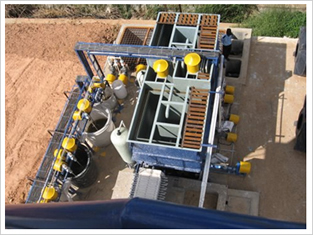
Sewage Treatment Plant, or domestic wastewater treatment, is the process of removing contaminants from wastewater and household sewage, both runoff (effluents) and domestic. The task of designing and constructing facilities for treating wastewaters falls to environmental engineers.

Sewage is created by residential, institutional, and commercial and industrial establishments. It includes household waste liquid from toilets, baths, showers, kitchens, sinks and so forth that is disposed of via sewers.
-----------------------------------------------------------------------------------------------------------------------------------------

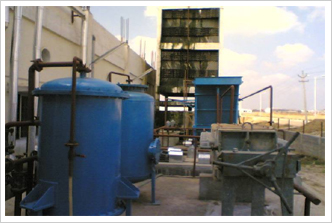
Effluent Treatment Plant

 
Effluent Treatment Plant Effluent Treatment Plant
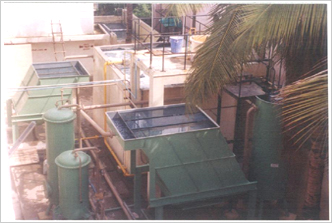
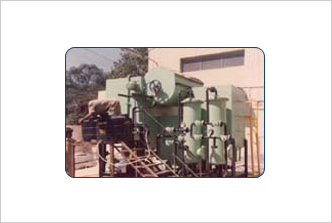
ETP SIDE VIEW WITH LAMELLA CLARIFIER,
P.S.F. & A.C.F. AND FILTER PRESS
 
 
Different technologies for Biological treatment of Effluent/ Sewage Treatment Plant :
The effluent after primary treatment will be subjected to secondary treatment. The major goal of this treatment is to remove soluble Organic Pollutants by oxidation & settling. This involves bringing the active microbes in contact with waste water which consume the impurities as food. These organisms; in presence of Oxygen (O2), convert the biodegradable organic matter into Carbon Di Oxide (CO2) water, more cell material and other inert products. With the help of this the total BOD reduction will be 90-95%.
-----------------------------------------------------------------------------------------------------------------------------------------

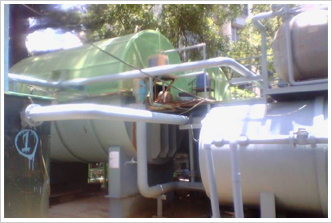
RBC (Rotating Biological Contactor)

 
Rotating Biological Contactor Of 800 KLD Capacity Rotating Biological Contactor Of 5 KLD Capacity
 
RBC is rotated slowly by an electrical motor (geared box) & is arranged in the bioreactor tank in such a way that its half portion is always submerged in the effluent/ sewage. The RBC rotates, the surface of the media is subjected alternately to wastewater/ Sewage and air which encourages an aerobic digestion of organic matter & forms biologically active film of micro-organisms (biomass).
(e.g. & picture pending)
 
Advantages:

1. High Efficiency of the plant
2. Less space requirement
3. Package plant
4. Sludge recycling is not required
5. Less quantity of sludge generation
6. Bio-sludge can be used as manure for garden
7. Effectively work for small capacity plant
8. Do not require Air Blowers
-----------------------------------------------------------------------------------------------------------------------------------------

Water Treatment Plant

Water Softening
Water Softening Water Softening

Hard water is formed by Calcium and Magnesium minerals dissolving in the rain water as it passes down through the layers of lime stone and is directly proportional to the quantity of these minerals absorbed.
When hard water is used in commercial or industrial applications, problem will be encountered with scale and scum both with costly consequences.

In the softening plant ion-exchange technology is used to remove the calcium and magnesium by replacing them with non-hardness forming Sodium.

 
Features

1. Free standing unit
2. High grade Post-sales Service
3. Easy Servicing
4. Easy Handling
5. Low regeneration time
6. Simple maintenance


Designed & Hosted by : MID Promoted by : GID