Designed & Hosted by : MID
Pramoted by : GID
|
|
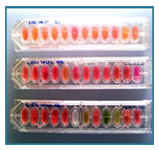 SRI is a full microbiology testing laboratory and conducts microbial identification tests. Correct identifications at genus and species level are important in solving microbial problems. We have provided this service to the pharmaceutical, medical device, cosmetics, food and other industries. The identification is offered at two levels: SRI is a full microbiology testing laboratory and conducts microbial identification tests. Correct identifications at genus and species level are important in solving microbial problems. We have provided this service to the pharmaceutical, medical device, cosmetics, food and other industries. The identification is offered at two levels:
biochemical utilization test and
16s ribosomal (genetic) analysis
The contaminants or repeatedly found colonies in the process area and during the environmental monitoring can be identified and then the interpretation of possible source of the contaminant indicated. This has proved to be a valuable input to the Pharmaceutical, Biotechnology and Food industry enabling clients to take corrective action and ensure quality assurance protocols. |
Microbial Limit Test :
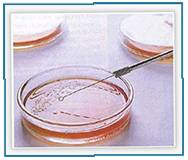 This test is designed to determine total aerobic microbial count and yeast and mold count. This test demonstrates that the product is free of Staphylococcus aureus, Escherichia coli, and Pseudomonas aeruginosa, Salmonella, This test is designed to determine total aerobic microbial count and yeast and mold count. This test demonstrates that the product is free of Staphylococcus aureus, Escherichia coli, and Pseudomonas aeruginosa, Salmonella,
C. albicans and A. niger.
c. Microbial Limit Confirmatory Test:
To confirm the presence or absence of Staphylococcus aureus, Escherichia coli, Pseudomonas aeruginosa, Salmonella, C. albicans and Aspergillus niger, microbial identification is performed. It can be tests like coagulase test and oxidase tests or complete microbial identification.
|
Standard Plate Count :
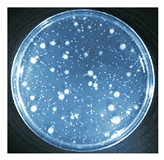 The standard plate count procedure provides a standardized mean of determining the density of heterotrophic bacteria in samples. This is an empirical measurement because organisms occur singly, in pairs, clusters, or packets, and no single growth medium or set of physical and chemical conditions can satisfy the physiological requirements of all organisms in a sample. Different Standard Plate Count that is performed are: The standard plate count procedure provides a standardized mean of determining the density of heterotrophic bacteria in samples. This is an empirical measurement because organisms occur singly, in pairs, clusters, or packets, and no single growth medium or set of physical and chemical conditions can satisfy the physiological requirements of all organisms in a sample. Different Standard Plate Count that is performed are:
-
Aerobic bacteria & fungi,
- Aerobic bacteria only
- Membrane filtration (liquids)
- Lactobacillus
- MPN coliform count and
- Molds & yeasts
|
Antimicrobial Effectiveness test / Preservative Efficacy Testing
Antimicrobial preservatives are added in the products to protect them from microbial contamination and also to inhibit the microbial growth that may be introduced from daily use of the product. Antimicrobial efficacy test evaluates the effectiveness of an antimicrobial preservative. 
The test uses five indicator organisms (namely, Escherichia coli, Staphylococcus aureus, Pseudomonas aeruginosa, Candida albicans and Aspergillus niger). The test is carried out in such a way that the product is challenged with the known strains of the microorganisms.
Samples are tested at different intervals to determine the survival of the organisms. The test demonstrates the antimicrobial efficacy of the product to stop the growth of organisms. The microorganism survival is monitored till 28 days.
|
|
Website :
www.sribioservices.com |
