Services


Skin


General Facts About Skin :

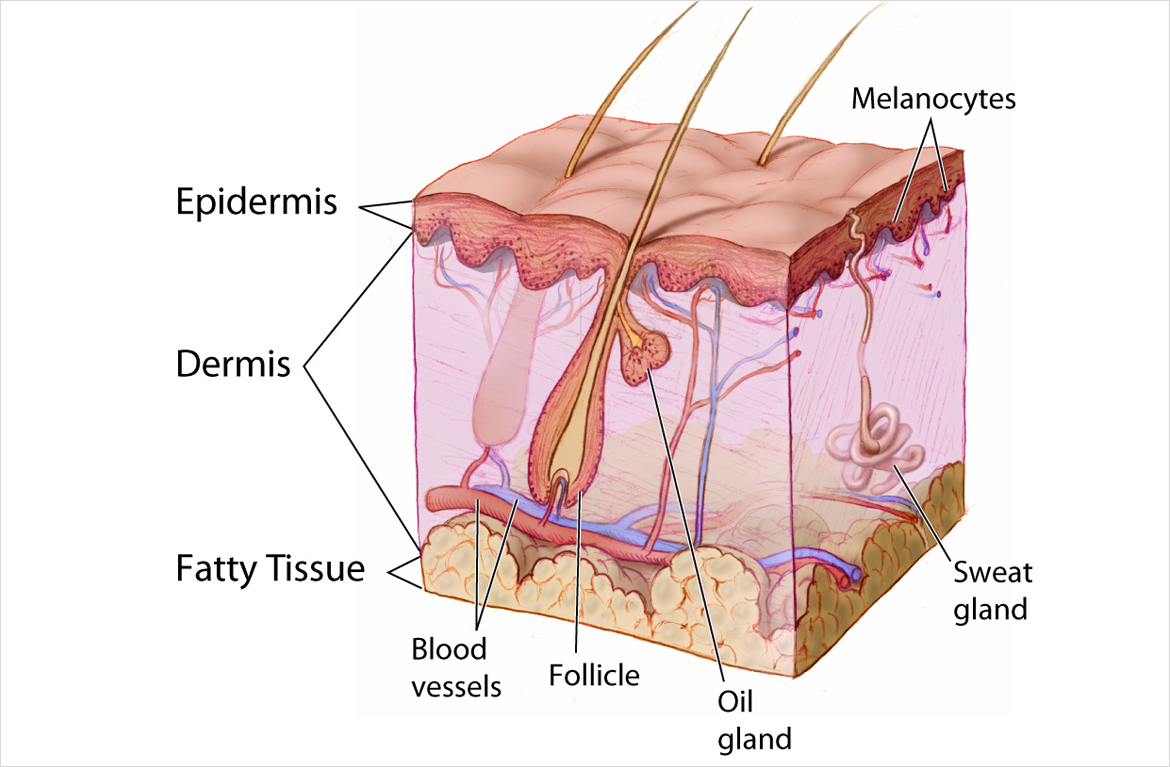
• Human skin consists of 3 main layers; upper epidermis, middle dermis & lower sub-cutaneous tissue

• Skin is the largest organ in the body, accounting for 15-20% of total body weight & covers a surface area of 2 m2.

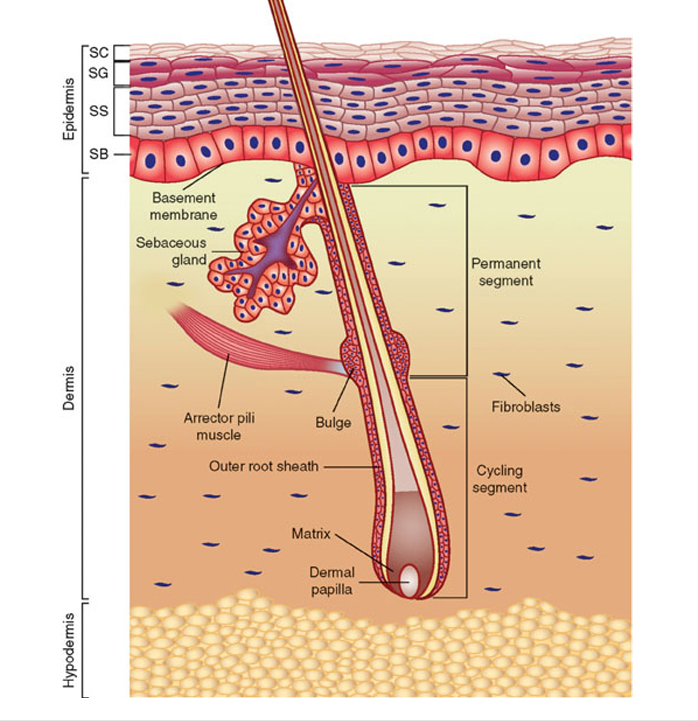
• The epidermis is mainly composed of keratinocytes and is 0.4-1.5mm in thickness. It is formed by division of cells in the basal layer which move outwards forming upper layers. The cellular progression from the basal layer to the skin surface takes about 30 days.

• Other cells in the epidermis are the melanocytes, Langerhans’ cells and Merkel cells.

• Melanocytes are cells that distribute packages of melanin pigment which gives skin its colour. The number of melanocytes does not differ much between white and black skin. Rather it is the nature of the melanin and the size of the cells containing it that account for the different appearances.

• The dermis is a supporting matrix with a remarkable capacity for retaining water. The thickness of the dermis varies from less than 0.5 mm to more than 5 mm. There are two principal types of protein, collagen and elastic tissue, out of which collagen comprises 80–85% of the dry weight.

• Skin also contains many supporting structures like hair follicles, pilosebaseous unit which secrete oily substance called sebum.

Functions of Skin :

• The main function of skin is to act as a barrier to external environment which can be

Regulation of body temperature achieved through dilation or constriction of blood vessels or secretion of sweat by sweat glands

As sensory organ, helping in perception of different sensations

Subcutaneous fat has important roles in cushioning trauma as well as providing insulation and a calorie reserve.


Hair


General Facts About Hair

Structure of Hairs

• Hair is made up of proteins called as keratins. The hair fiber has three cell layers: an outer cuticle, the cortex (which forms the bulk of the fiber in most hair types) and a variable central medulla

• It is fixed to skin through a tubular structure called as hair follicle. A hair follicle extends from skin surface into the dermis (middle layer of skin).

• The hair follicle is divided into two regions: the upper part consisting of the infundibulum and isthmus and the lower part comprising the hair bulb and suprabulbar region.

• The upper follicle is a relatively constant structure, whereas the lower follicle undergoes repeated episodes of regression and regeneration during the hair cycle.

• Cells from hair bulb give rise to different layers of hair fiber.

• On the scalp, and some other regions of the skin, hair follicles are arranged in groups of three or more follicles known as follicular units.

Hair Cycle :

• Hair follicles undergo a repetitive sequence of growth and rest known as the hair cycle; It consists of three stages, Anagen, Catagen & Telogen

The period of active hair growth is known as anagen and the duration of this phase is responsible for determining the final length of the hair.

Under normal circumstances 80-90% of hair follicles on the human scalp are in anagen at any one time.


Cosmetology


Introduction

Cosmetology (derived from Greek “kosmētikos “means "beautifying") is the art or practice of the beautification of the body (including skin, hair, or nails). It deals with the use of cosmetics/other products & procedures to enhance beauty of a person.

In today’s highly competitive world, external appearance of a person makes a huge difference. With the help of different cosmetological procedures, we can see appreciable improvement in skin blemishes.

It consists of many procedures; out of which most important are :

• Chemical peeling
• Derma rollers
• Electroporation
• Microdermabrasion
• Lasers
• Botox
• Fillers


Chemical Peeling General Facts

Chemical peeling involves application of chemical agent of known strength so as to cause controlled destruction of superficial layers of skin". The new, regenerated skin is usually smoother and less wrinkled than the old skin.

Indications

Chemical peels are performed in following conditions :

• Acne /pimples - (along with other medications ) to control the disease quickly so that complications like dark spots, pits/scars can be avoided.
• Dark spot/ facial pigmentation - due to pimples, skin ageing, pregnancy or taking birth control pills (melasma).
• Facial glow - improve the look and feel of skin that is dull in texture and colour.
• Treat fine lines & wrinkles caused by sun damage, aging and hereditary factors.
• Improve the appearance of mild scarring.
• Reduce age spots, freckles.
• Correcting rough texture of skin.


Enquiry


* Indicates Compulsory Fields
 

Name of Company : *
Name of Contact Person :*
Address / City / Location : *
Tel. No. / Cell No. : *
Email : *
Requirements Details : *
 
Home - About Us - Services - Enquiry - Contact Us
Designed & Hosted by MID | Promoted by GID